
Craffenheim Rottweilers
Up and Coming Rottweilers
Up-and-Coming Rottweilers at Craffenheim
Preserving German ADRK Bloodlines. Developing the Next Generation.
Preserving the past. Evaluating the present. Breeding for the future.
At Craffenheim Rottweilers, the future of the breed is never left to chance. Every young male and female we consider for our future breeding programme represents a carefully evaluated combination of pedigree, temperament, conformation, traditional Rottweiler type, health, movement and the potential to contribute something meaningful to the next generation.
Our up-and-coming Rottweilers are not simply puppies who grew into impressive-looking young dogs. They are carefully selected prospects, chosen for the qualities they inherit, the characteristics they demonstrate and the promise they may hold for the future of the Rottweiler breed.
Based in South Africa, Craffenheim is committed to preserving valuable German ADRK bloodlines, respecting the traditional Rottweiler type and continually striving to improve the breed through thoughtful, responsible and purposeful breeding.
Our young males and females carry more than promising pedigrees. They carry the responsibility of helping preserve the characteristics that have made the German Rottweiler such a remarkable working dog, guardian and companion.
How We Select Our Pick-of-the-Litter Rottweiler Puppies
One of the most important decisions a responsible Rottweiler breeder makes happens long before a puppy is old enough to enter a breeding programme: which puppy should stay?
Choosing our pick of the litter at Craffenheim is a detailed process that begins with an understanding of the pedigree and continues through observation, handling, evaluation and ongoing development. We look beyond the photograph, the first impression and the puppy that immediately catches everyone's eye.
A puppy may be breathtakingly beautiful, beautifully marked or the biggest in the litter. However, the puppy that looks most impressive at eight weeks is not automatically the puppy best suited to our future breeding programme.
We select with the adult dog in mind: the mature Rottweiler we hope to develop, the qualities we wish to preserve, and the areas in which a carefully planned pairing may help improve the next generation.
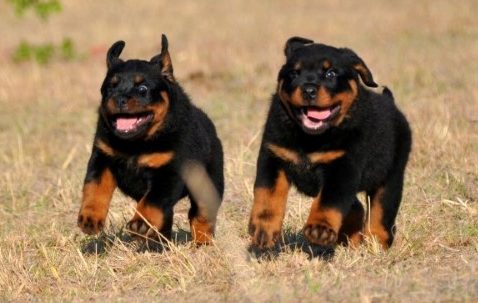
1. Pedigree, German Bloodlines and Genetic Potential
A Rottweiler's pedigree is far more than a list of impressive names. It is a record of ancestry that helps us understand the characteristics a puppy may inherit and how those characteristics fit into our long-term breeding plans.
We carefully study the sire and dam, the generations behind them, the consistency of the dogs within the pedigree, and the qualities demonstrated by their relatives. We consider established German ADRK bloodlines, including influential Rottweilers from respected German kennels with histories of achievement in conformation and working disciplines.
We evaluate:
- The consistency of traditional German Rottweiler type across generations.
- Strong, recognisable breed characteristics and correct proportions.
- Stable, confident and dependable temperaments within the family lines.
- Documented working ability, trainability and performance.
- Conformation quality and the strengths and weaknesses of related dogs.
- Available health screening, genetic information and longevity records.
- The compatibility of the puppy's pedigree with our existing breeding programme.
- The potential to preserve valuable bloodlines while prioritising health, temperament and soundness.
A famous pedigree alone does not make a puppy a future breeding dog. Equally, a promising puppy must be evaluated as an individual, not simply selected because its parents or grandparents were successful.
At Craffenheim, pedigree provides the foundation. The puppy itself must still demonstrate the qualities we need.
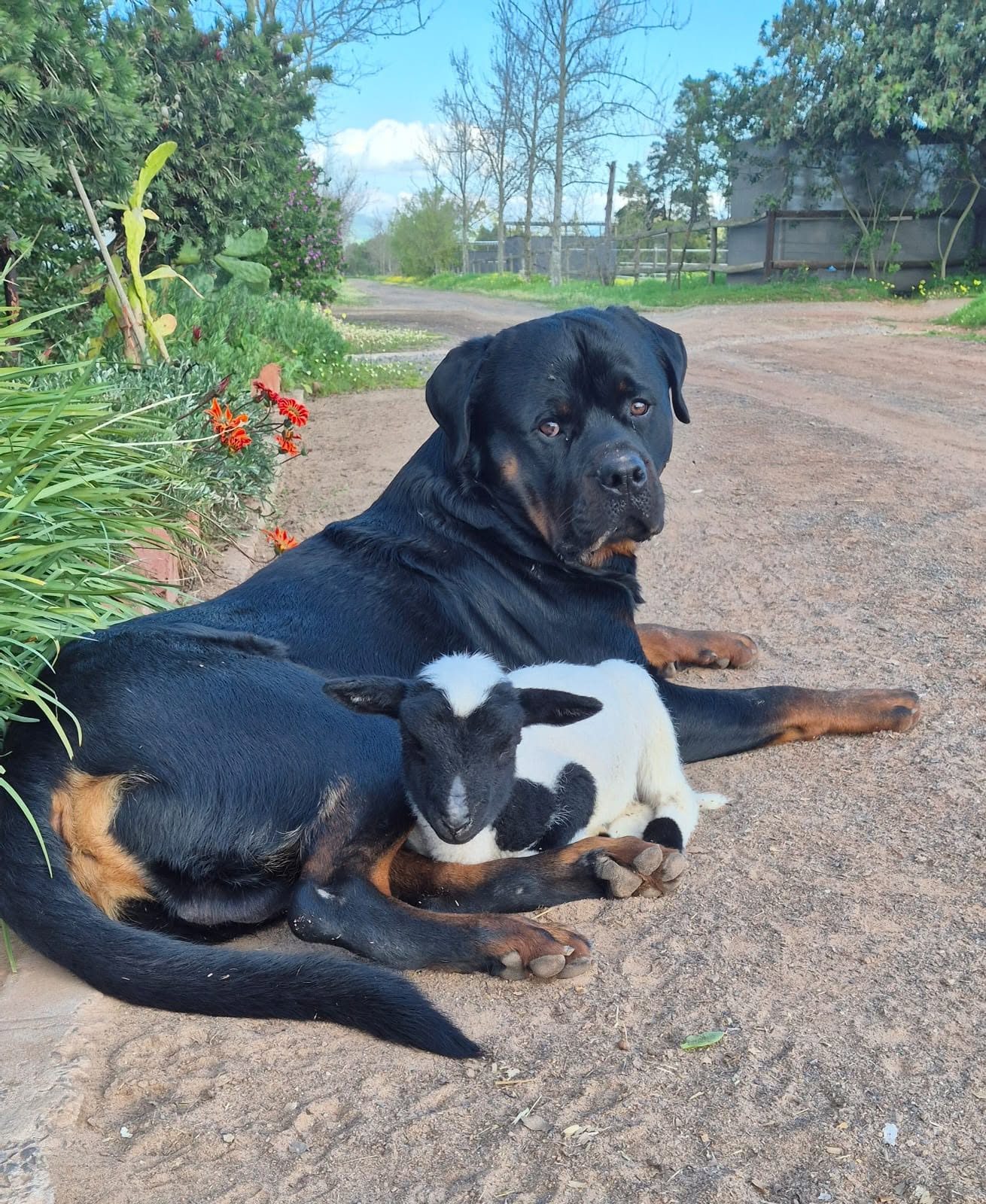
2. Temperament: The Foundation of a True Rottweiler
A beautiful Rottweiler should also be a sound, stable and confident Rottweiler.
Temperament is one of the most important considerations in our selection process. The Rottweiler is a powerful working breed, and strength without sound temperament is not the goal.
From an early age, we observe how our puppies respond to people, new surroundings, handling, everyday sounds and unfamiliar experiences appropriate to their age. We look for promising signs of confidence, curiosity, resilience, composure and a willingness to engage with their environment.
We consider:
- Confidence without unnecessary fearfulness.
- Curiosity and a willingness to investigate new things.
- Recovery after a mild surprise or unfamiliar experience.
- Comfort with appropriate human interaction and handling.
- Sociability and the ability to engage without excessive nervousness.
- A balanced combination of alertness, independence and responsiveness.
- Motivation, engagement and willingness to learn.
- The potential for appropriate working drive and trainability.
- Emotional stability and the ability to settle after excitement.
- Awareness of the environment without indiscriminate aggression.
Puppies are still developing, so early observations are not a final verdict on adult temperament. We continue to observe and assess our young Rottweilers as they mature.
We are looking for the balanced Rottweiler: alert when required, confident in its environment, capable of learning and working, affectionate with its people, and equipped with the temperament to live responsibly within a family and society.
3. Conformation: Building a Correct, Functional Rottweiler
Conformation is not simply about producing a dog that looks impressive in a photograph. It concerns how the dog's physical structure relates to the breed standard, movement, function and long-term soundness.
When evaluating our pick-of-the-litter puppies, we consider overall balance and proportions, the developing topline, chest, forequarters, hindquarters, bone, feet and general structural harmony.
Our observations include:
- Correct proportions and overall balance.
- A strong, developing topline and firm body structure.
- Adequate bone and substance appropriate to the individual puppy.
- A well-developed chest and appropriate body proportions.
- Balanced forequarter and hindquarter construction.
- Sound feet and developing limb alignment.
- Correct tail set and overall silhouette.
- Breed-appropriate head, muzzle and expression.
- Correct bite and dental development, monitored as the puppy grows.
- Efficient, balanced movement and the potential for endurance.
- Structural characteristics that support a functional adult dog.
A massive puppy is not necessarily the best-constructed puppy. Heavy bone and impressive size have their place, but they must be balanced with sound structure, appropriate proportions and the ability to move efficiently.
Our goal is not exaggerated size at the expense of function. We seek a powerful, substantial, correctly constructed Rottweiler that remains true to the breed.
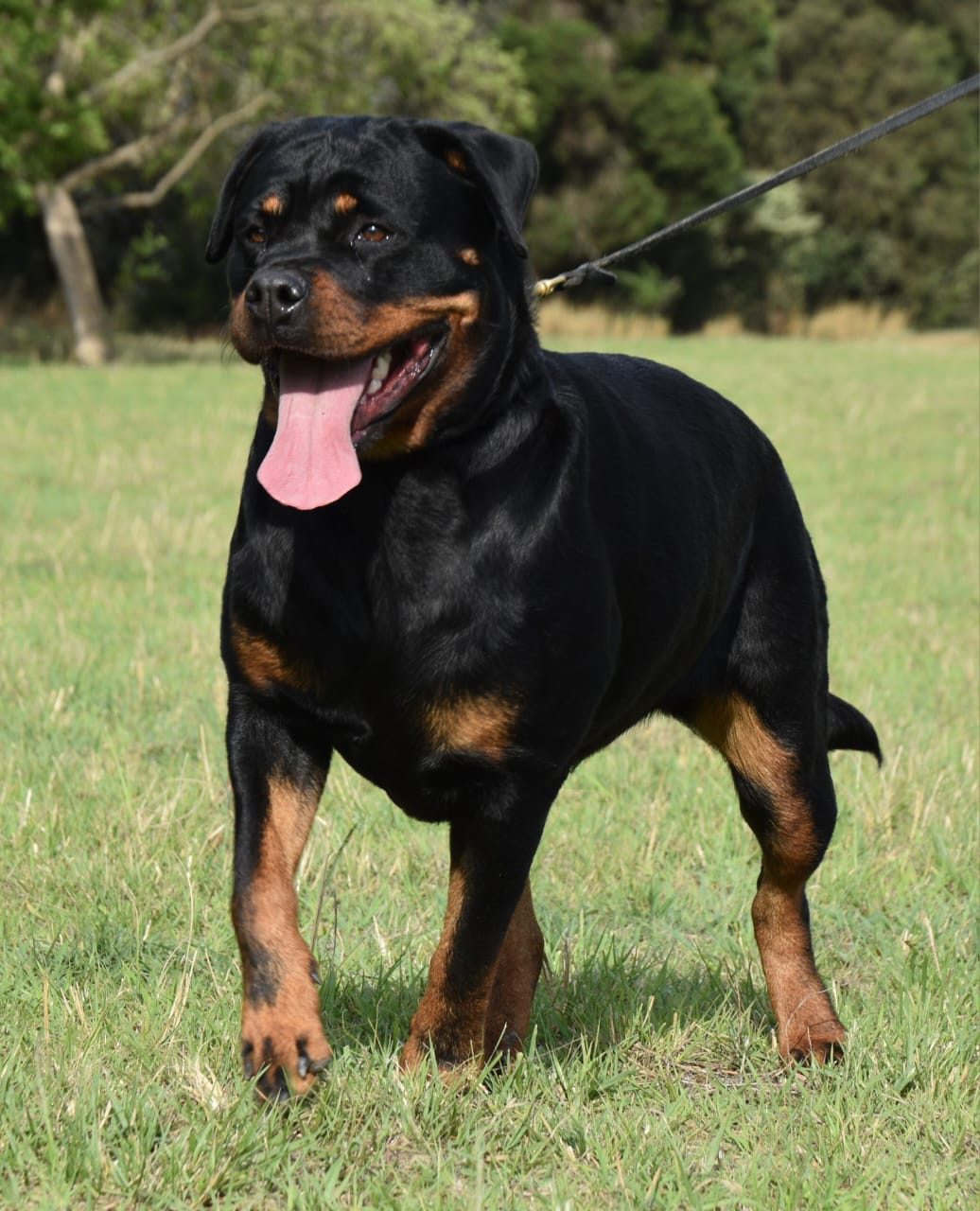
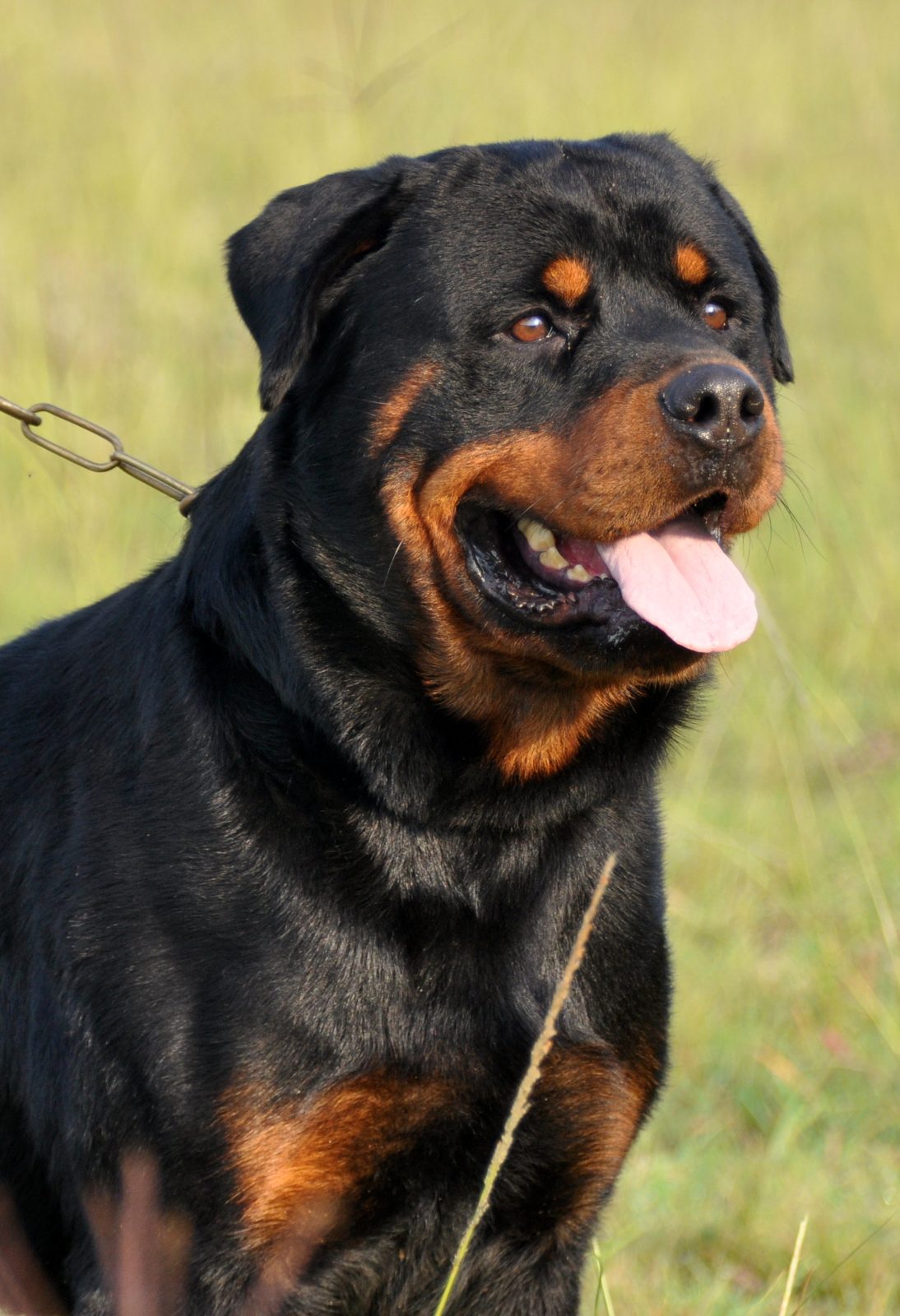
4. Head Type, Expression and Breed Identity
The Rottweiler's head is one of its most recognisable characteristics, and correct head type is an important part of preserving traditional German Rottweiler identity.
We assess the developing shape and proportions of the skull, muzzle, stop, jaw, overall expression and relationship between the head and the rest of the body. We also consider how these features compare with the breed standard and the characteristics established within the puppy's bloodlines.
A handsome head can be striking, but it must remain correct and proportionate. We do not select a puppy on head size alone, nor do we allow one attractive feature to outweigh shortcomings elsewhere.
The best breeding prospect is the puppy whose overall qualities work together to create a balanced, recognisable Rottweiler.
5. Puppy Movement: Looking Beyond the Standing Pose
A puppy can look exceptional while standing still. Movement helps tell another part of the story.
We observe how each puppy walks, trots, turns, accelerates and changes direction in an age-appropriate environment. We look for natural coordination, balance, developing stability and an easy, purposeful way of moving.
As the puppies mature, we continue assessing their movement and structure, recognising that growth and development can temporarily change how a young dog looks and moves.
We consider:
- Natural coordination and balance.
- Straightforward, purposeful movement.
- Developing front and rear movement.
- Appropriate reach and drive for the puppy's stage of development.
- Foot placement and limb alignment.
- The relationship between movement and overall conformation.
- Signs that may warrant further veterinary or specialist assessment.
Movement is not judged in isolation. It is considered alongside structure, health, temperament and the individual dog's stage of growth.
We want our future breeding Rottweilers to be capable of doing more than looking good in the show ring. They should have the physical foundation for a sound, active life.
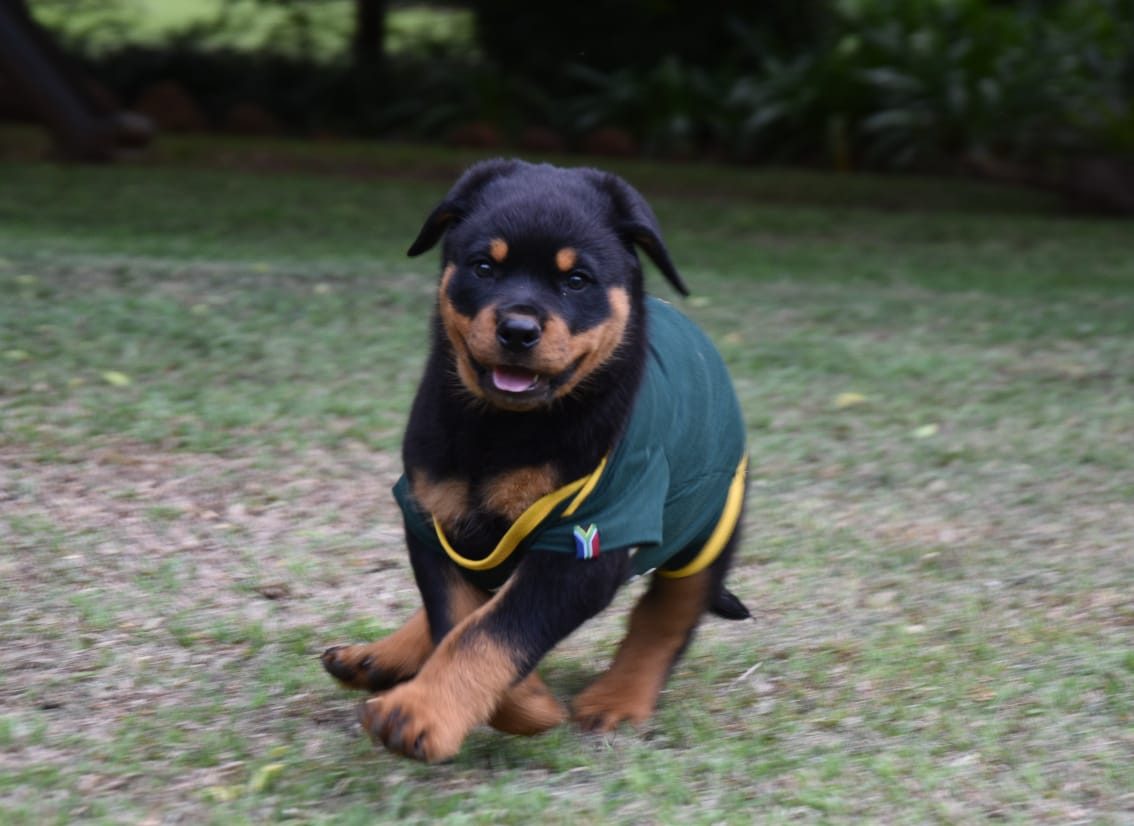
6. Markings, Colour, Pigment and Eye Colour
Correct markings and colour contribute to the traditional appearance of the Rottweiler. We pay attention to the quality and placement of the characteristic tan markings, the richness of the black coat, pigmentation and overall presentation.
We also observe eye colour and eye characteristics as the puppies develop. Eye colour can change during puppyhood, so an early observation is not necessarily a reliable indication of the mature dog's appearance.
Our considerations include:
- Correct, clearly defined tan markings in relation to the breed standard.
- Coat colour and overall pigmentation.
- Placement and symmetry of markings.
- Eye colour and the development of the eyes.
- Eye health and any concerns requiring veterinary attention.
- The overall harmony of the puppy's appearance.
At Craffenheim, aesthetics matter, but they are one part of a much larger picture. A puppy with beautiful markings or particularly attractive eyes will not automatically be chosen over a puppy with stronger overall potential for temperament, structure, health and the preservation of important bloodlines.
Beauty may catch our eye. Breeding potential earns a puppy its place.
7. Size, Bone, Substance and Development
The Rottweiler should be powerful, substantial and athletic, with physical strength supported by correct proportions and sound construction.
We observe how each puppy develops in relation to its age, sex, family lines and overall structure. We look for appropriate bone, body substance, strength and balance without encouraging excessive weight or growth at the expense of sound development.
The biggest puppy in the litter is not automatically the best puppy. Rapid early growth can be misleading, and a puppy's size at a particular age does not reliably determine its eventual quality as an adult breeding dog.
We consider the whole animal, including how the puppy carries itself, moves, interacts with its environment and develops over time.
Our aim is a mature Rottweiler with the substance and presence expected of the breed, while retaining soundness, balance, fitness and function.
8. Drive, Intelligence, Workability and Trainability
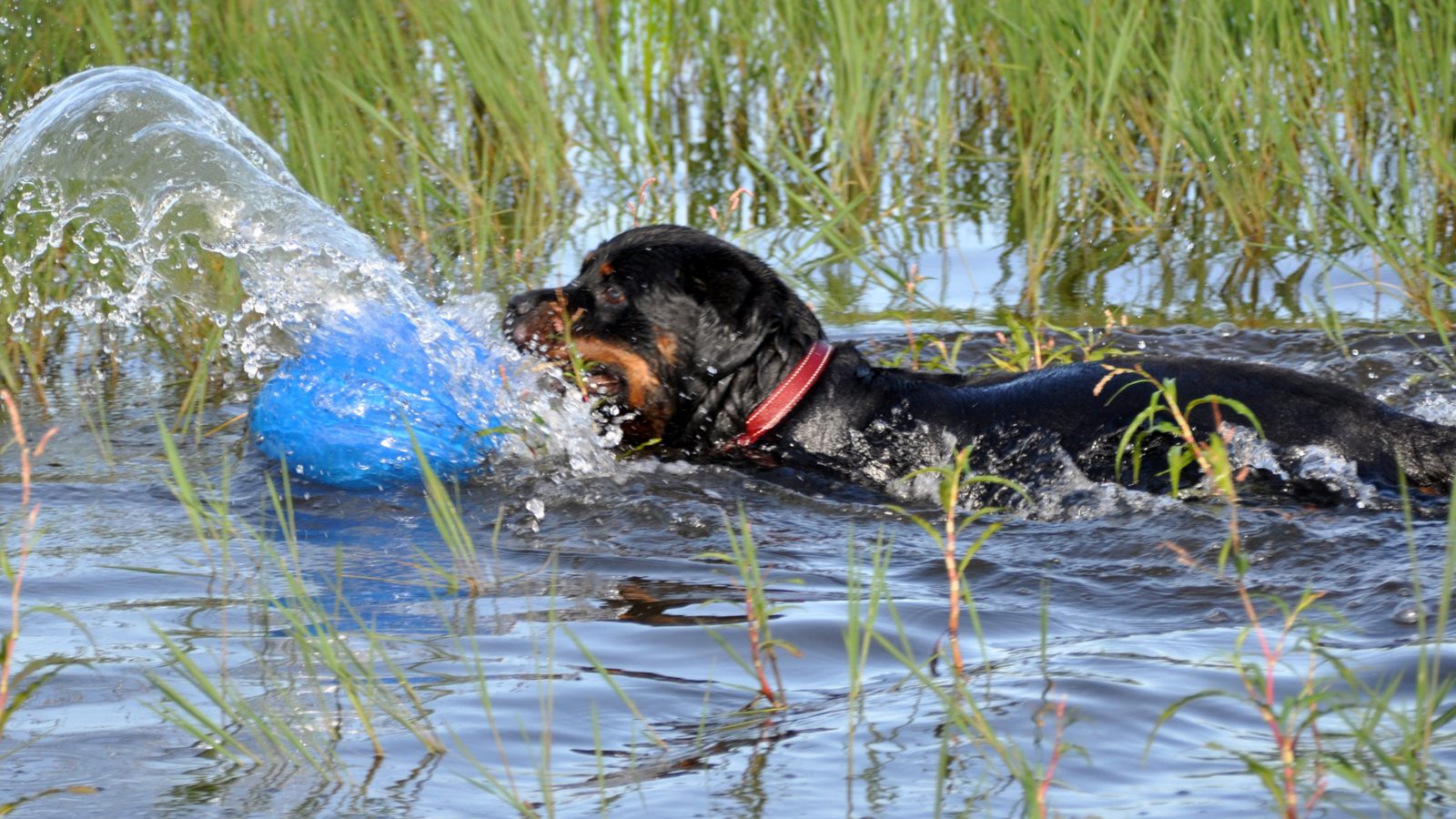
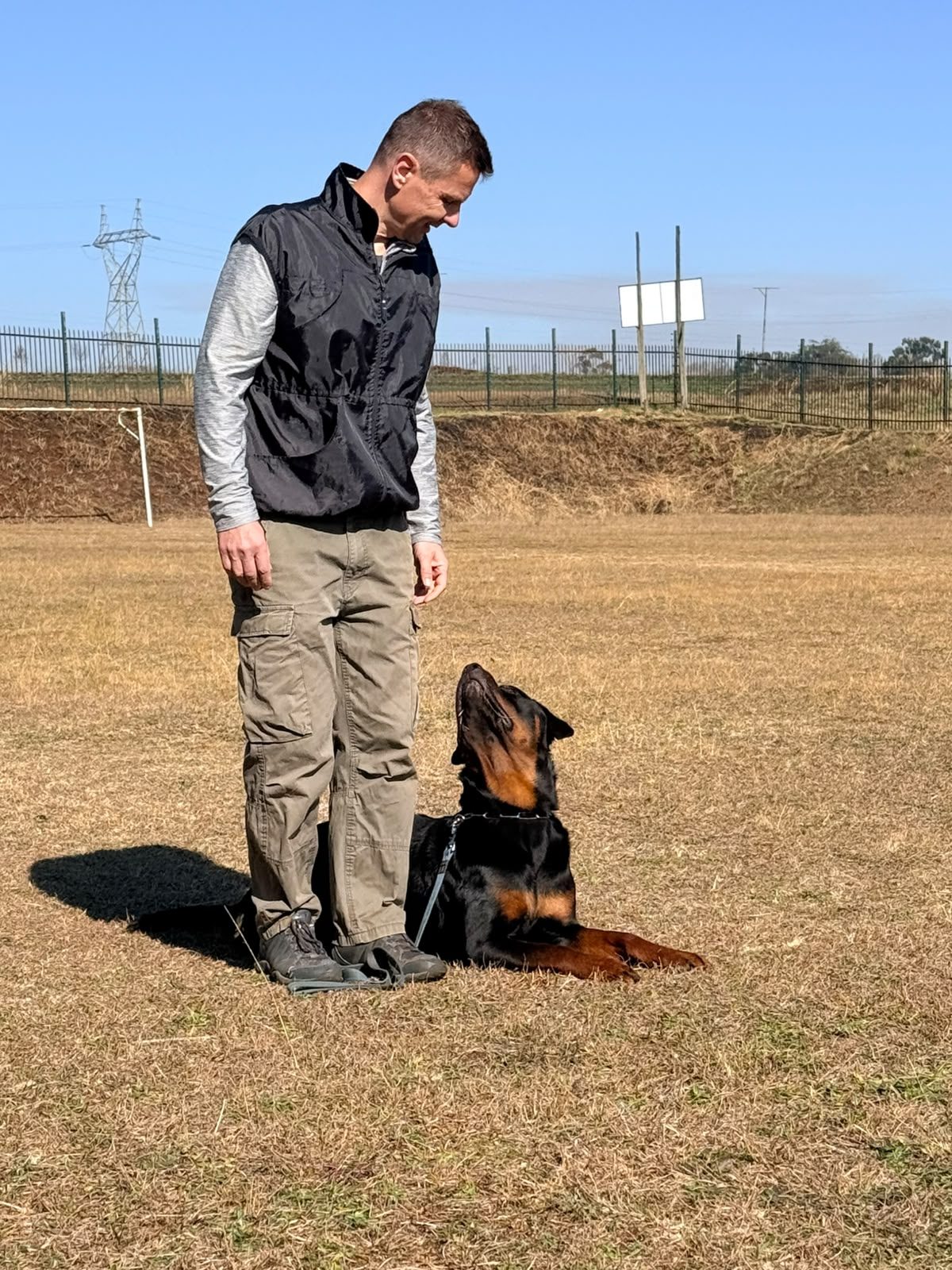
The Rottweiler's heritage as a working breed remains an important part of its identity. We value young dogs that demonstrate curiosity, engagement, confidence and a willingness to learn.
We observe each puppy's interests, motivation, response to play and interaction with people. As the dogs mature, we can develop a clearer understanding of their individual drives and working potential.
We look for promising qualities such as:
- Engagement with people and the environment.
- Interest in play, toys or other suitable rewards.
- Willingness to explore and investigate.
- Responsiveness to early training and guidance.
- The ability to focus and recover from excitement.
- Confidence in age-appropriate new experiences.
- A suitable balance between initiative and cooperation.
We do not expect every puppy to display identical drives or personalities. Nor do we assume that a bold puppy will automatically become a better working dog. We assess each individual in context and continue to develop its abilities through appropriate training.
9. Health, Family History and Responsible Breeding Potential
A promising pedigree, beautiful conformation and exceptional temperament cannot replace responsible health screening.
We consider available family health histories and the screening appropriate to the individual dog, its pedigree and its intended future role. As our young Rottweilers mature, required health and genetic testing must be completed before breeding decisions are made.
Our approach includes consideration of:
- Relevant hip and elbow screening.
- Appropriate genetic testing and interpretation of results.
- Veterinary assessment and general physical health.
- Eye health and other concerns indicated by the individual or family history.
- Cardiac screening where appropriate to the dog and breeding plan.
- Family longevity and documented health information.
- Reproductive suitability and mature physical development.
- The health implications of a proposed mating.
No pedigree or family history can guarantee that a dog will never develop a health problem. Responsible breeding means gathering the best available information, making informed decisions and avoiding the assumption that attractive appearance or a distinguished pedigree alone is sufficient.
Our young males and females will only be considered for breeding once they have reached the appropriate maturity and age, completed the required health and genetic assessments, and demonstrated that they are suitable for the programme.
Why the Best-Looking Puppy Is Not Always Our Pick of the Litter
This is where careful breeding differs from simply choosing a favourite.
The most eye-catching puppy may have exceptional markings, a beautiful head, impressive bone or a particularly striking presence. Those are desirable qualities, but breeding decisions must account for much more than the features that photograph well.
A puppy may be visually outstanding yet have a temperament, structural characteristic or pedigree consideration that makes another littermate a more appropriate choice for our long-term goals.
Another puppy may appear less spectacular in the early weeks but demonstrate a more balanced combination of qualities, a temperament we particularly value, or bloodlines that better complement our future breeding plans.
We also consider what each puppy may contribute to the breed as an adult. The ideal selection depends on the quality of the individual, the strengths and weaknesses of its family lines, and the qualities we aim to preserve or improve through a future pairing.
At Craffenheim, we do not select simply to repeat what we already have. We evaluate how a young dog might contribute to the next generation.
That may mean choosing a puppy for its temperament rather than its markings, its structural balance rather than its size, or its pedigree compatibility rather than its immediate visual appeal.
It may also mean deciding that a beautiful puppy is better suited to a different future than breeding.
Our pick of the litter is not necessarily the puppy that wins the popularity contest. It is the puppy we believe has the strongest overall potential to contribute responsibly to the future of Craffenheim Rottweilers.
Because puppies change as they grow, selection is never the end of the process. It is the beginning of a long-term commitment to observation, development and reassessment.
Preserving the German ADRK Rottweiler: Our Breeding Philosophy
At Craffenheim, one of our central aims is to preserve valuable, established German ADRK bloodlines and the traditional Rottweiler type developed and maintained by generations of dedicated breeders.
We respect the heritage of historic German Rottweiler kennels whose dogs have contributed to the breed through conformation, working performance, recognised achievements and carefully maintained family lines.
Among the kennels represented in our pedigrees are:
- Vom Schwaiger Wappen
- Vom Schwaiger Rathaus
- Vom Hause Neubrand
- Vom Hause Anin
- Von der Crossener Ranch
- Vom Rheiderland
- Delle Abbadesse
Over the past 15 years, we have imported Rottweilers whose parents hold German titles in working and show disciplines. These include dogs from families with achievements such as Klubsieger titles, IGP 3 and Körung among males and females.
These accomplishments form part of the history we study when evaluating pedigrees. They provide valuable context about conformation, working performance and breeding suitability, while each dog must still be assessed individually.
Our history also includes accomplished Rottweilers we owned, including Yaris vom Schwaiger Rathaus and Chris vom Schwaiger Rathaus. Their achievements and stories are featured on our dedicated Craffenheim Legends page.
Our aim is to improve the Rottweiler in South Africa while preserving the traditional German ADRK type. We strive for dogs that combine correct conformation, stable temperament, appropriate working ability, sound health and the unmistakable character of the breed.
Preservation and improvement should work together. We want to protect valuable bloodlines without becoming complacent, and to improve where possible without losing the qualities that make the Rottweiler recognisably and authentically a Rottweiler.
For us, the true German Rottweiler is not defined by appearance alone. Type, temperament, structure, function and responsible breeding decisions must all form part of the picture.
Explore Our German Rottweiler Pedigrees and Bloodlines
At Craffenheim Rottweilers, pedigree research is an integral part of our breeding philosophy. We believe that understanding a Rottweiler means looking beyond its immediate parents to the generations of dogs that helped shape its temperament, conformation, working ability and traditional breed type.
Every dog's profile on our website includes a link to its pedigree on Working-Dog.eu. Visitors can follow these links to explore ancestry and the working or show titles recorded for dogs within each pedigree. Where records are available, these bloodlines extend back through generations to 1901, offering a valuable view of the breed's history.
Through these records, visitors can investigate the ancestry behind our dogs and discover connections to respected German kennels and their established bloodlines.
We encourage prospective owners, breeders and Rottweiler enthusiasts to explore the pedigrees directly. They offer more than a collection of names: they provide a way to understand the generations of breeding decisions, working achievements and conformation accomplishments behind the dogs we have today.
A pedigree becomes far more informative when the names are understood in context: who the dogs were, what they achieved, which bloodlines they represent and why those connections matter to a planned mating.
Our commitment to pedigree transparency reflects a simple principle: responsible breeding begins with knowing as much as possible about the dogs behind our dogs.
A distinguished pedigree is an important starting point, but it cannot replace individual assessment, health screening or responsible breeding decisions. Each young Rottweiler must demonstrate its own suitability as it matures.
Raising Our Future: Feeding, Growth, Health and Socialisation
Selecting a promising puppy is only the first step. Developing that puppy into a well-adjusted, physically sound and capable young Rottweiler takes time, consistency and close attention.
Large-breed puppies grow rapidly, and their development deserves particular care. At Craffenheim, we closely monitor our young males and females throughout their growth stages, paying attention to body condition, weight changes, appetite, activity, coordination and general wellbeing.
Carefully Managed Nutrition
We are disciplined about feeding because healthy growth is about balance, not simply making a puppy bigger.
Our young Rottweilers receive age-appropriate nutrition designed to support controlled growth and good body condition. We monitor portions and adjust feeding as the puppy's needs change, rather than encouraging rapid weight gain or excessive size.
Monitoring Growth Spurts
Growth does not happen in a perfectly even line. Puppies can go through phases in which their bodies look temporarily unbalanced, their coordination changes or their appetite increases.
We monitor these changes and adjust activity and management where needed. We avoid treating every growth spurt as a reason to increase food indiscriminately, and we seek veterinary guidance when development raises concerns.
Our priority is a healthy, well-conditioned dog with the opportunity to develop soundly—not a young Rottweiler pushed to look mature before its body is ready.
Health and Physical Development
Routine veterinary care, appropriate vaccinations and parasite prevention, monitoring of general health, and attention to any unusual signs form part of responsible puppy development.
We pay attention to how our young dogs move, rest, play and recover from activity. Exercise is adapted to age and development, with sensible opportunities for movement, exploration and play rather than excessive or forced activity.
Socialisation and Everyday Experience
A future breeding Rottweiler needs more than good genetics. It needs guidance, experience and an environment in which confidence and sound behaviour can develop.
Our young dogs are gradually introduced to appropriate people, surroundings, everyday sounds, handling, routines and age-suitable experiences. We encourage calm exploration and positive interaction while respecting each puppy's temperament and developmental stage.
Socialisation is not about overwhelming a puppy or forcing it to accept every situation. It is about building positive experiences, helping the dog develop confidence and teaching it how to respond appropriately to the world around it.
Training, Boundaries and Individual Assessment
We begin establishing routines, communication and age-appropriate training early. As the dogs grow, we continue to assess their behaviour, responsiveness, confidence and ability to settle.
We recognise that each young Rottweiler is an individual. Some are naturally more outgoing, others more thoughtful; some are highly motivated by toys, while others respond differently to rewards.
Our role is to understand each dog, develop its strengths and provide consistent guidance. A future breeding prospect must be nurtured as well as evaluated.
We do not simply keep our most promising puppies. We invest in developing them.
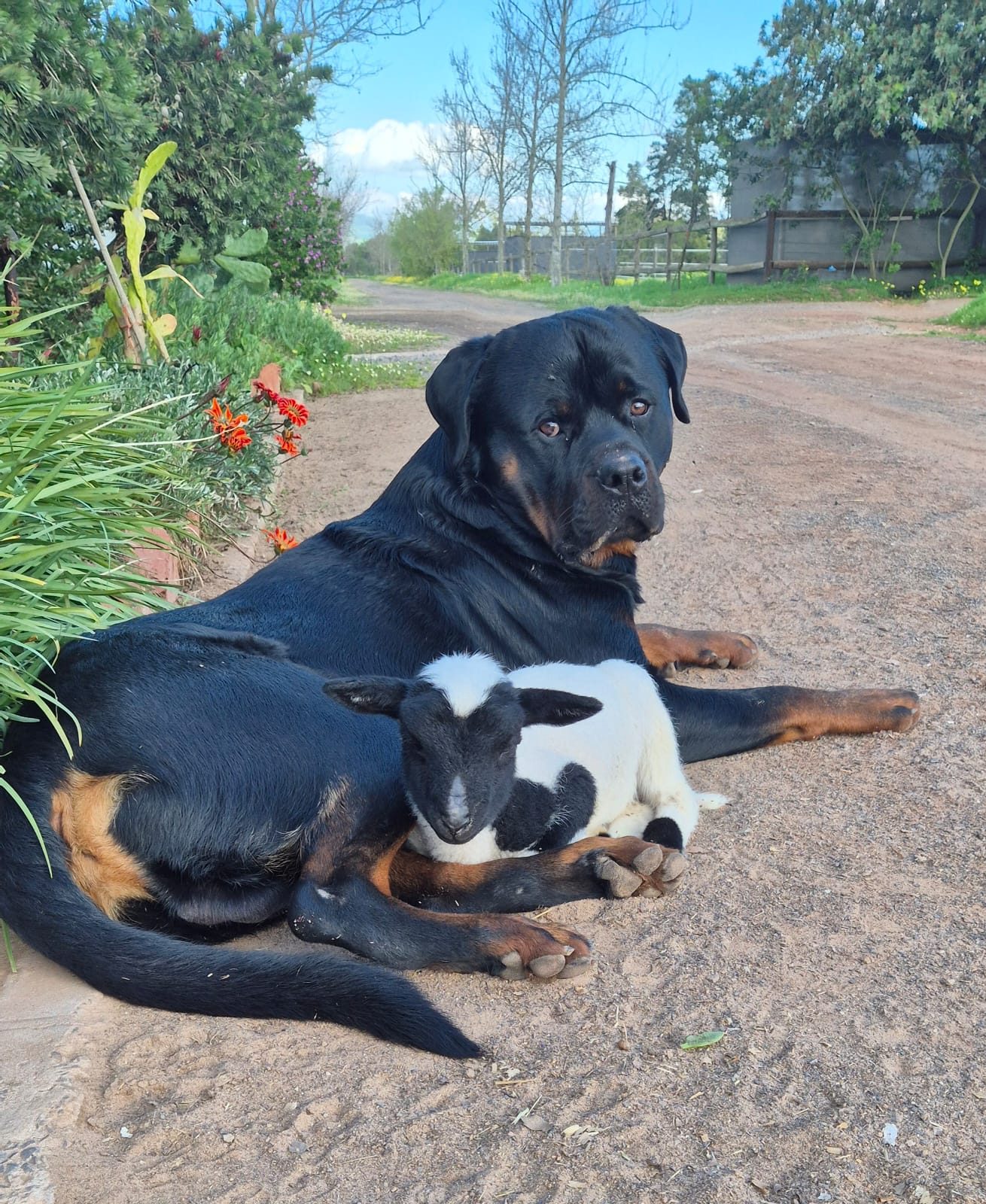
Meet the Up-and-Coming Rottweilers of Craffenheim
Our young males and females represent the next chapter in the Craffenheim breeding programme. Each has a unique personality, individual strengths and a place in the ongoing process of evaluating the qualities we hope to carry forward.
They are still developing, and their futures will be determined by maturity, continued assessment, health results and suitability for responsible breeding—not by promise alone.
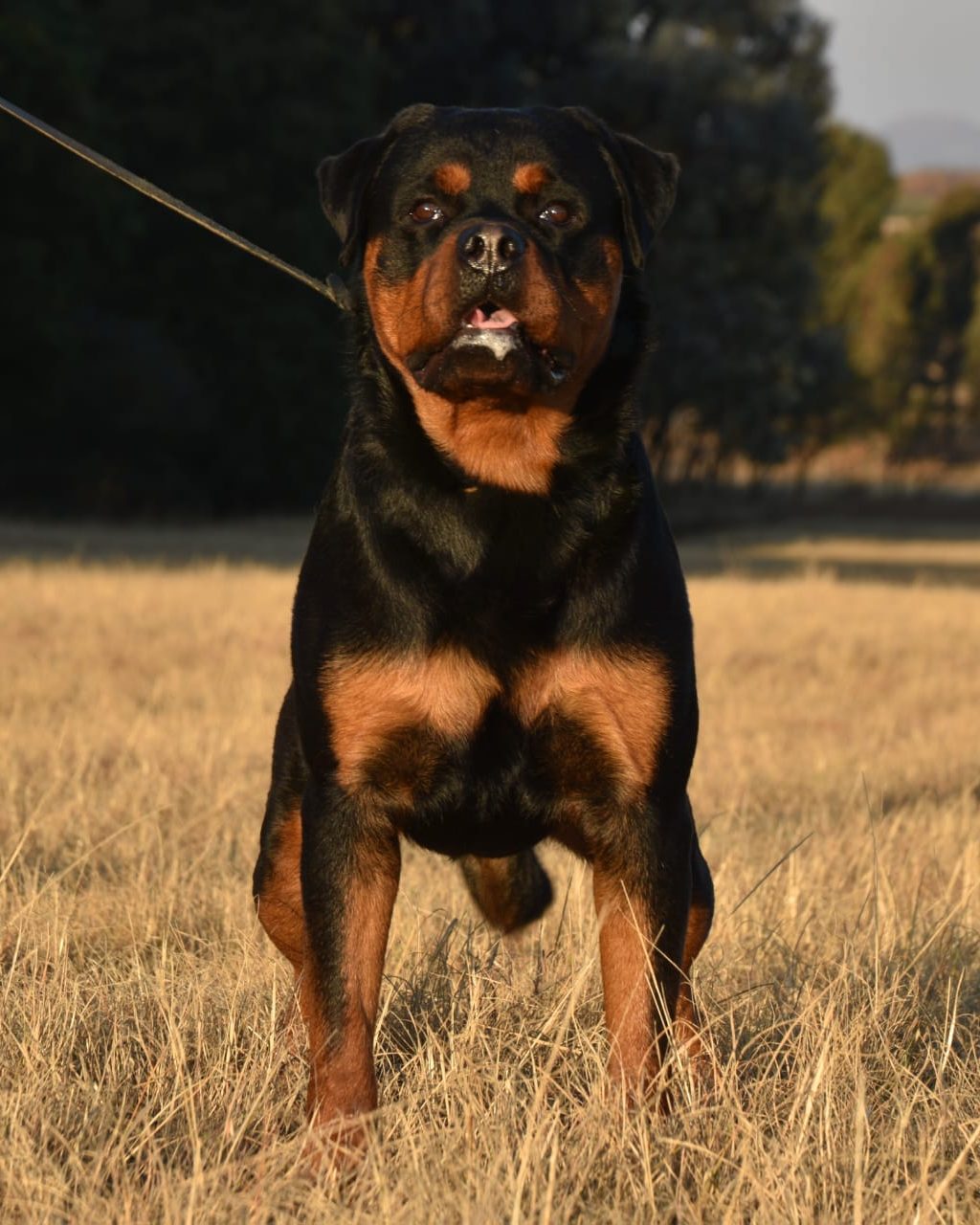
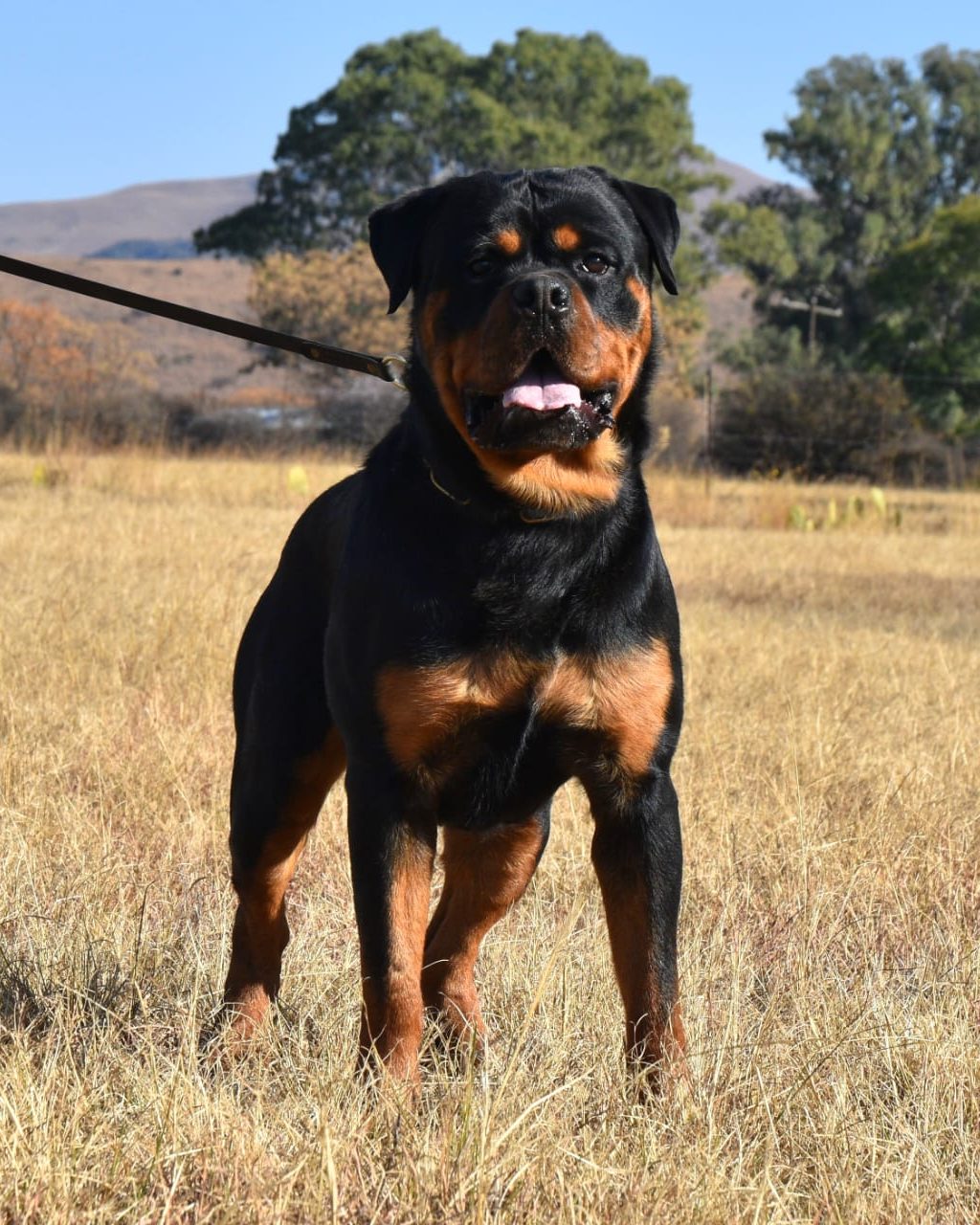
Our Young Females: An Important Part of the Future
Our future females are just as important to the direction of our kennel as our males. The dam contributes half of a puppy's genetic inheritance, and her temperament, physical qualities, maternal behaviour and family lines are all relevant to the next generation.
When evaluating young females, we look for the same overall balance of sound temperament, correct conformation, traditional type, health and pedigree compatibility. We also pay attention to qualities that may be particularly valuable in a future dam, including stability, resilience, sound maternal instincts where observable, and the ability to complement the strengths of an appropriate sire.
A future breeding female must never be selected on appearance alone. She must be physically and mentally suitable for the role, and her future breeding decisions must be made with the welfare of both the dam and her puppies at the centre.
Our young females are monitored and developed with the same care, patience and high expectations as our males. Each will be assessed on her own merits, bloodlines and potential contribution to the Craffenheim programme.
The Future of Craffenheim Rottweilers
Our up-and-coming Rottweilers are the result of careful selection, considered breeding choices and a long-term commitment to the breed. They are not finished products, and we do not pretend that a promising puppy's future is guaranteed. Instead, we continue to observe, train, assess and learn as each dog develops.
We believe responsible Rottweiler breeding requires patience: the patience to wait for maturity, the discipline to complete health testing, the knowledge to evaluate pedigrees, and the integrity to make breeding decisions based on the whole dog.
Our ambition is to preserve the valuable German ADRK bloodlines that have shaped the Rottweiler, maintain correct traditional type, and contribute to the future of the breed in South Africa through sound, thoughtful and responsible breeding.
We are proud of the young males and females growing up at Craffenheim. Each represents potential, possibility and the continuation of a breeding philosophy built around the qualities that matter most.
At Craffenheim Rottweilers, the future is not chosen by appearance alone. It is built through pedigree, temperament, soundness, dedication and respect for the breed.
We remain committed to the true, traditional German ADRK Rottweiler: powerful yet balanced, confident yet stable, capable yet affectionate, and unmistakably Rottweiler in type and character.
Preserving heritage. Developing potential. Improving the breed—one considered generation at a time.