
👶🐾 Children & Rottweiler Puppies: A Guide for Families
💡 Why This Is Important
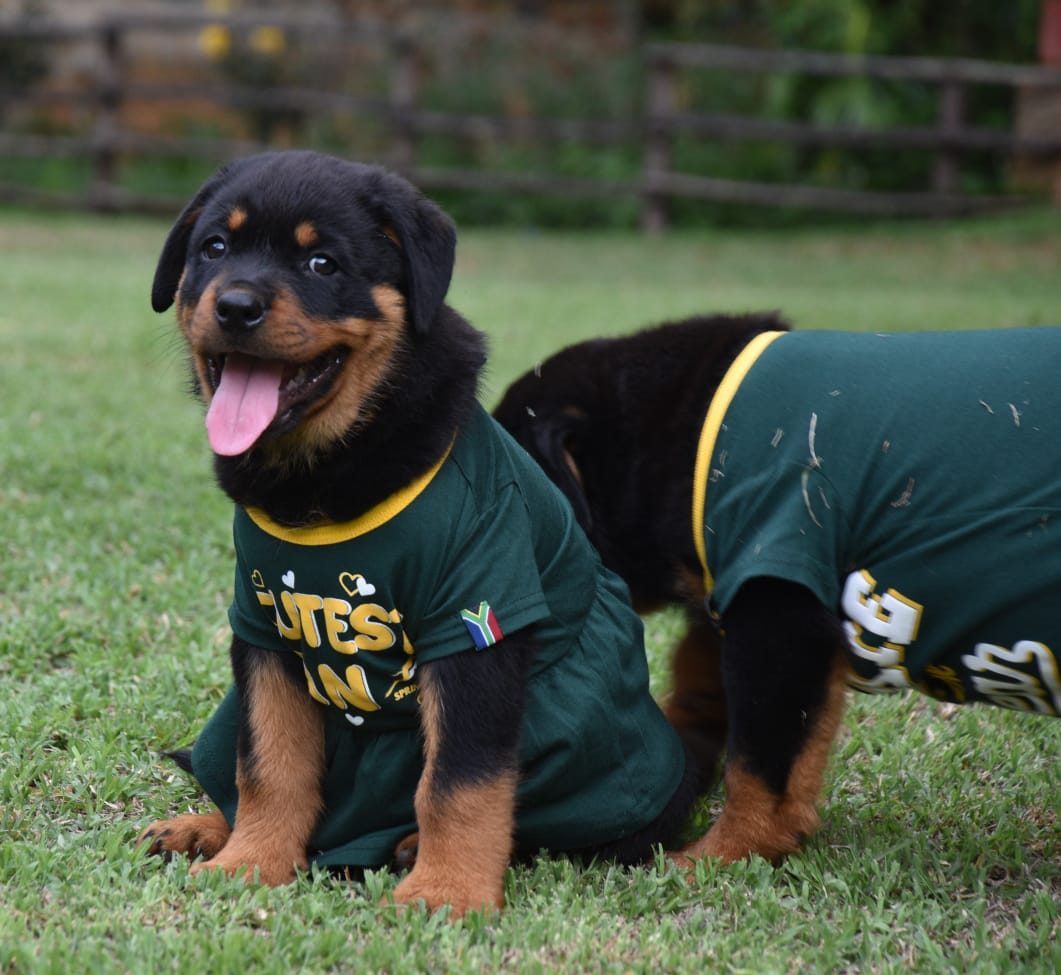
- Rottweilers are intelligent, strong, and protective by nature.
- Puppies are still learning boundaries and may play rough without realizing their strength.
- Teaching children safe interaction builds trust, prevents accidents, and ensures a lifelong bond between the puppy and family.
✅ Golden Rules for Children Around Puppies
- Always Supervise: Children and puppies should never be left alone unsupervised, no matter how gentle the puppy seems.
- Teach Gentle Hands: Show children to stroke the puppy softly (no pulling ears, tail, or fur).
- Respect Boundaries: If the puppy goes to its crate, bed, or safe space, children must leave it alone.
- No Rough Play: Wrestling, chasing, or sitting on the puppy is dangerous for both the child and the puppy’s developing bones.
- Quiet Voices: Encourage calm speaking tones – loud screaming can frighten or overstimulate the puppy.
- Don’t Disturb Eating: Children should never approach or touch the puppy while it is eating or chewing a bone.
- Offer Treats Safely: Teach children to hold treats flat on the palm to avoid accidental nips.
🧒 Teaching Children to Understand Puppy Behavior
- Nipping is Normal: Puppies explore with their mouths; children must not encourage biting games. Redirect with a toy.
- Zoomies & Excitement: Teach kids to stand still “like a tree” if the puppy gets too wild, instead of running (which excites chasing).
Body Language:
- Wagging tail ≠ always happy (could mean overexcited).
- Growling or hiding = puppy needs space.
- Yawning, licking lips, or turning away = puppy feels stressed.
⚠️ Common Mistakes to Avoid
- Carrying the Puppy Incorrectly: Small children should not pick up the puppy (risk of dropping and injury).
- Teasing Games: Dangling toys or food just out of reach can frustrate or encourage roughness.
- Encouraging Jumping: Don’t let children excite the puppy into jumping up – it’s bad for joints and teaches bad manners.
- Overhandling: Too much hugging, squeezing, or constant touching can overwhelm the puppy.

🐾 Positive Ways Children Can Help Raise the Puppy
- Mealtime Helper: Older children can measure kibble (with adult supervision).
- Training Partner: Kids can practice basic commands like sit or shake paw using treats.
- Play Leader: Ball games, tug (with rules), and gentle fetch are great outlets for puppy energy.
- Grooming Assistant: Brushing the puppy under supervision teaches care and responsibility.
- Calm Companion: Reading to the puppy or sitting quietly beside it builds trust.
🛡️ Safety Reminders for Parents
- Supervise all interactions until the child and puppy understand each other’s boundaries.
- Never punish the puppy harshly in front of children – model calm, positive training.
- Teach children that the puppy is not a toy, but a family member who deserves respect.
❤️ Key Takeaway
When children learn to interact respectfully and safely with their Rottweiler puppy, the bond that forms is built on trust, respect, and love. A well-guided relationship between child and puppy grows into a lifelong friendship with one of the most loyal breeds in the world.